What fishing equipment do I bring on my Musky and Walleye charter?
All fishing equipment is supplied for Walleye and Musky tours (rods, reels, lures), but if you have a favourite rod or lure you prefer to use, bring it. Bring your fishing license and your own food and drinks.
What to bring regarding clothing?
Bring clothes that are comfortable and suitable for the weather the day(s) of your charter.
Do I get my refund back if there is a cancellation?
Yes, if I need to cancel you will be fully refunded. If you need to cancel, then unfortunately there is no refund.
What do I bring for safety equipment?
All safety equipment needed is aboard the boat. Unless you require a unique size, big or small, you will need to bring your own life jacket.
Are there washroom breaks during the charter?
Yes, we will discuss this before departure.
Do we cast or Troll?
Both! We cast until you are tired and then we sit in Muskoka chairs and troll until you are ready to cast again. Pro Tip: The biggest fish over the years have been caught while trolling.
How do I pay?
Deposits: Canadian residents can e-transfer funds to shayne@50missioncast.com
Our U.S. friends can pay through PayPal.
Remainder of payment: Paid by CASH ONLY on the day of your charter.
Do you fish with other parties?
No, you just fish with your own party.
What kind of fishing license do I get?
French River is Zone 11.
There are 2 types of licenses, “Sport” and “Conservation”. To fish Musky, you must have a SPORT license. If you are fishing Walleye, a Sport license allows you to keep more fish, and Conservation license only allows half the limits. You need a fishing license between the ages of 18 to 64. You can purchase these at Canadian Tire or fishing stores like The Bass Pro shop etc.
What’s the proper name Walleye or Pickerel?
There are differences between Walleye and Pickerel. They are not the same fish at all. Walleye and Pickerel are actually two unrelated fish, they don’t even look similar and belong to two different species of fish. In Eastern Canada (especially Ontario), people often call Walleye “Pickerel”, even though that’s technically incorrect. Pickerel is from the Pike family. They are less prized than the Walleye.
Walleye is from the Perch family.
Regarding Musky fishing equipment what to bring?
Lorem ipsum dolor sit amet, consectetur adipiscing elit. Ut elit tellus, luctus nec ullamcorper mattis, pulvinar dapibus leo.
Regarding Walleye fishing equipment to bring?
Once again, I have all the walleye equipment for each person. But if you have a expensive favor walleye rod or lures bring them.
What to bring regarding clothing?
Bring cloths that will make you comfortable for the weather that day because of the 10 X 10 Tri-toon top the enclosed bimini shelters us from any wind. Keep us dry from the rain and snow. Provides us with much needed shade from the hot sun. Thunder and lightning storms are different situations… We’ll play it by ear that day, as fishing is fantastic before a storm. But we also have to be safe while on the water at the same time. Big storm systems roll through quickly on the French River so we’ll make decisions as they develop. If the forecast is calling for thunder and lighting all day there”s no refund but you can rebook for another day in the future.
Do I get my refund back?
Yes, if I need to cancel for any reason. No if you cancel.
What to bring for Safety Equipment
Yes, if I need to cancel for any reason. No if you cancel.
What to bring for Safety Equipment
I have all the safety equipment, but if you are a unique size either big or small bring your own life jacket or just let me before hand and ill make sure your taken care of.
Washroom Breaks
We are currently working on installing a porta potty on the Tri-toon for the 2025 fishing season. Will keep you posted were just waiting for a call from our welder. In previous seasons I’ve driven to resorts or driven to islands etc.
Is the Tri-toon wheelchair accessible?
Yes it is, just let me know before hand.
Does the French River get rough?
In 30 years the biggest waves I’ve seen on Middle French River is 3 ft. The biggest waves I’ve seen on Upper French River is 4 ft. On Lake Nipissing 8 ft. Saying that, my Tri-toon is 30 ft long and its smooth and steady on wavy days. 95 percent of the time the river is flat or 1 ft waves. The other 5 percent of the days when other boats are struggling in bigger waves were inside the enclosed bimini protected from the outside elements dry and comfortable relaxing catching fish from Muskoka chairs trolling.
Do we cast or troll?
Actually both, we cast until your tired and then we go sit down in Muskoka Chairs and troll until you tell me when your ready to cast again. I will say this, my biggest fish over the years have been caught when trolling.
Payment with credit cards?
No credit card payments. Canadian residents can e-transfer at Shayne@50missioncast.com. United States residences can pay me through paypal or cheque for deposits, remainder of monies payable day of Charter.
Do you fish with other parties?
No, you just fish with your own party.
What kind of fishing license should I get?
Middle & Upper French River is Zone 11. There’s two fishing licenses in Ontario, Sport & Conservative. You need a sport fishing license to fish musky. Walleyes you can by sport license and you allowed to fish your limit. Conservative license for Walleye only allows you to keep half the limits allowed by the ministry.
Bring some bug spray sometimes you have that 1 black fly that works your leg until you finally get it. Bug spray will avoid all that swinging. lol Saying that, there’s no mosquitoes when your on the water they stay on land.
Upper French River Walleye Patterns
French River Walleye Spring Patterns.
In the springtime once water temperatures reach between 44F – 48 F (6.7 – 8.9). Walleyes begin laying their eggs during the night in 2-3-ft of water shortly after ice out. Walleye breeding grounds are near creeks, streams, rivers that have rock shorelines that are
exposed to wind, waves and current. Moving water aerate their eggs and the rocky shorelines protects their eggs as they settle down between the cracks and crevices. Protection from pesky perch, suckers and other panfish.
Walleye Slot Size 40 cm – 60 cm. 1 over 60 cm’s.
Upper French River Walleye Summer Patterns
Summertime walleyes, unfortunately, the possibilities are endless this time of year for both the fishermen and the walleyes. If you’re chasing smaller eatable walleyes stay close to the same areas walleyes used to lay their eggs. Here’s the reason why other baitfish use the same breeding grounds as walleyes. The next eating opportunity for walleyes after baitfish are done spawning is insects hatching in the mud basin. When the insect hatch is done, summer-pattern walleyes will be more spread out than any other time of the year.
To consistently catch walleyes on a daily basis you’ll need electronic help like 360 imaging, fishfinders, water Navionics maps, etc. This will help you find weedline points, offshore humps, shoreline breaks, turns pockets, rock bottoms, bars, and baitfish. In addition to sandy flats, outside weedlines, gravel, rockpiles, along with point and rock breaks. The largest points extending into the main basin are classic areas as well. Keep in mind, walleyes relate to the bottom-most of the time at least during the day.
They like hard-bottom areas and will feed on yellow perch, shiners, and other minnows along with crayfish and insects, depending on where the best feeding opportunities are located. Unlike big walleyes, their patterns are very consistent and no problem figuring it out. They’re located in deep water about 40-feet down following baitfish from spring to fall. You 100 percent need to depend upon your fish electronics during this time of year.
Upper French River Walleye Fall Patterns
As the cooler weather starts settling in and the leaves begin to change. Fall time is trophy time, female walleyes put on the feed bag and start bulking up for the winter months. Cold temperatures force walleyes out of their cozy summer environments into open water during the fall season and this is why you have a better chance at catching monster walleyes.
Fall walleye fishing is all about moving around in your boat trying to locate schools of baitfish in open water. Ninety percent of walleyes leave the main river, current areas, bays, etc and head for open deep water in the basin. Saying that walleyes do a full circle and end up back in 10-15-feet of water near creeks, streams, and river mouth areas. If you’re not going to fish deep open water stay near their breeding grounds in the fall. Before the weeds begin to die stay in 15 -25-feet of water on the windblown side that is holding bait fish.
Once the weeds began to die the walleye seem to move 25 feet or deeper. Once again find baitfish and stay on the same side as the wind. This time of year is a great time to troll walleyes to find active suspended fish and mark places that you see fish holding. Then go back later and vertically jig the marked areas on your fishfinder. As fishermen that fall season is always giving us new challenges to overcome especially when turnover happens. Cooling water disrupts the summer thermocline, leading to fall turnover. Fishing is terrible during this period fish are scattered and difficult to pattern during turnover.
I recommend moving out of deep open water and either start trolling or trying vertical jigging. Like before turnover but not in deep water troll in 10 -15 -feet range and use your fishfinders to try to find active fish near creeks and rivers until turnover is done. Once conditions stabilize definite patterns arise. The reoxygenation of deepwater allows fish to go back into deep open water for the rest of the year. Once again you need to use your fishfinders and find active fish in hopes all your hard work pays off and you catch a fall monster trophy walleye!!! Give 50 Mission Cast Head Charter Shayne Stevenson a call 905.806.1971 or email: Shayne@50missioncast.com
Whats the proper name Walleye or Pickerel?
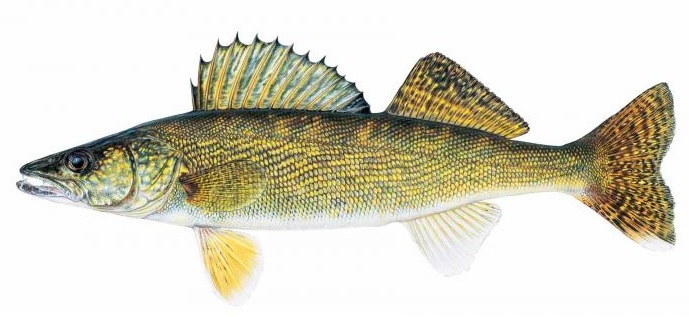
What is the proper name for this fish? French River Walleye? French River Pickerel? There’s differences between Walleye and Pickerel there not the same fish at all. History books tell us it was the Americans who first named this fish “Walleye.” Canada’s name for this fish was Canadian Pickerel! Fish biologists say walleye and pickerel are actually two unrelated fish, they don’t even look similar and belong to two different fish families. Here’s some pictures below.
French River musky patterns Musky Spring Patterns
Once muskies turn three and four years old there considered mature enough to start the spawning cycle. Once waters reach 50 – 59 F musky start there migration towards shallow, soft bottomed areas in bays with inlet flow. Shoreline areas where vegetation will appear first, river backwaters and creeks, shallow weedy beds are great breeding grounds for muskies as well. In addition to sandy areas that contain sandgrass that will hold that warmth of the sun during the day.
Research tells us there’s multiple environmental factors that affect when muskies lay their eggs. We know there’s no exact water temperature at which muskies spawn at year after year and no muskies spawn at the same time. Each musky is affected by their own individual biological clock then add variables such as weather, barometric pressure, current water temperatures and availability of spawning muskies. Keeping all the above information in mind April is typically the month muskies start spawning for a two week period.
Females leave the spawning grounds first and start heading back to deep water. Male muskies tend to stay at the spawning site for a few weeks after spawning is complete. Seven to fourteen days later musky eggs hatch and their first meal is digesting their yoke sac, next is nearby plankton and then they start eating small fish.
French River Musky Patterns
Once muskies finish spawning the water temperatures are roughly around 59-68 F. The majority of fish will spread out around the lake looking for emerging weedbeds, rocks, and bait fish with access to deeper water close by. This time of year muskies prefer warmer water temperatures and enjoy 70 – degree water. So whether we are talking the surface to 10 feet in shallow water, or the same top 10 feet of water in the deepest water in the lake, much of the forage and the target species will be in that zone. Certainly they may be a little deeper over open water, but most will remain in the upper layer where they are comfortable. The one exception to the shallow rule (spring fish holding in the top layer of water after the spawn) are rivers with heavy current. The current does two things that influence where muskies will hold.
First, it mixes the water, essentially eliminating the warmer upper layer effect. Second, current is something big predators don’t wish to fight against. Muskies will tuck out of the current either adjacent to it behind structure or on the bottom, allowing it to flow over them. In the both places they are expending minimal energy while waiting to see what the current brings them.
Once summertime time hits and the water temperatures get consistently in the 75 F plus range. Then its deeper water in all aspects. Muskies often relocate to main lake structures where the water is cooler in this area.
Clear, Spotted & Barred Muskies and muskie patterns
L
French River Musky Patterns
Days get shorter and colder and water temperatures fall from 68 to 58 F. Muskies start moving away from deep water structure back to weed flats/edges, slop, shallow rocks around that 10 foot mark. The open water bite can be non-existent. As a rule of thumb, the closer the lake is to turnover, the shallower the muskies get. Lake turn over once the water is anywhere from 58 – 54 F. Turnover is a term used to describe the process in which a lake flips its water. In the summer, the top portion of the water is warmer then the bottom portion. As fall progresses, the top layer of water becomes colder then the bottom layer, which causes the bottom layer to rise up and the top layer to sink down. Turnover results in water mixing which stirs up sediment and weeds throughout the water column.
During turn over muskies move up to shallow parts of the lake. Once turn over is done and water temperatures ar 50 F to freeze up muskies go back to open water adjacent to their shallow areas where ciscoes / tullibees spawn. If you have any questions regarding French River Musky Patterns give us a call.